



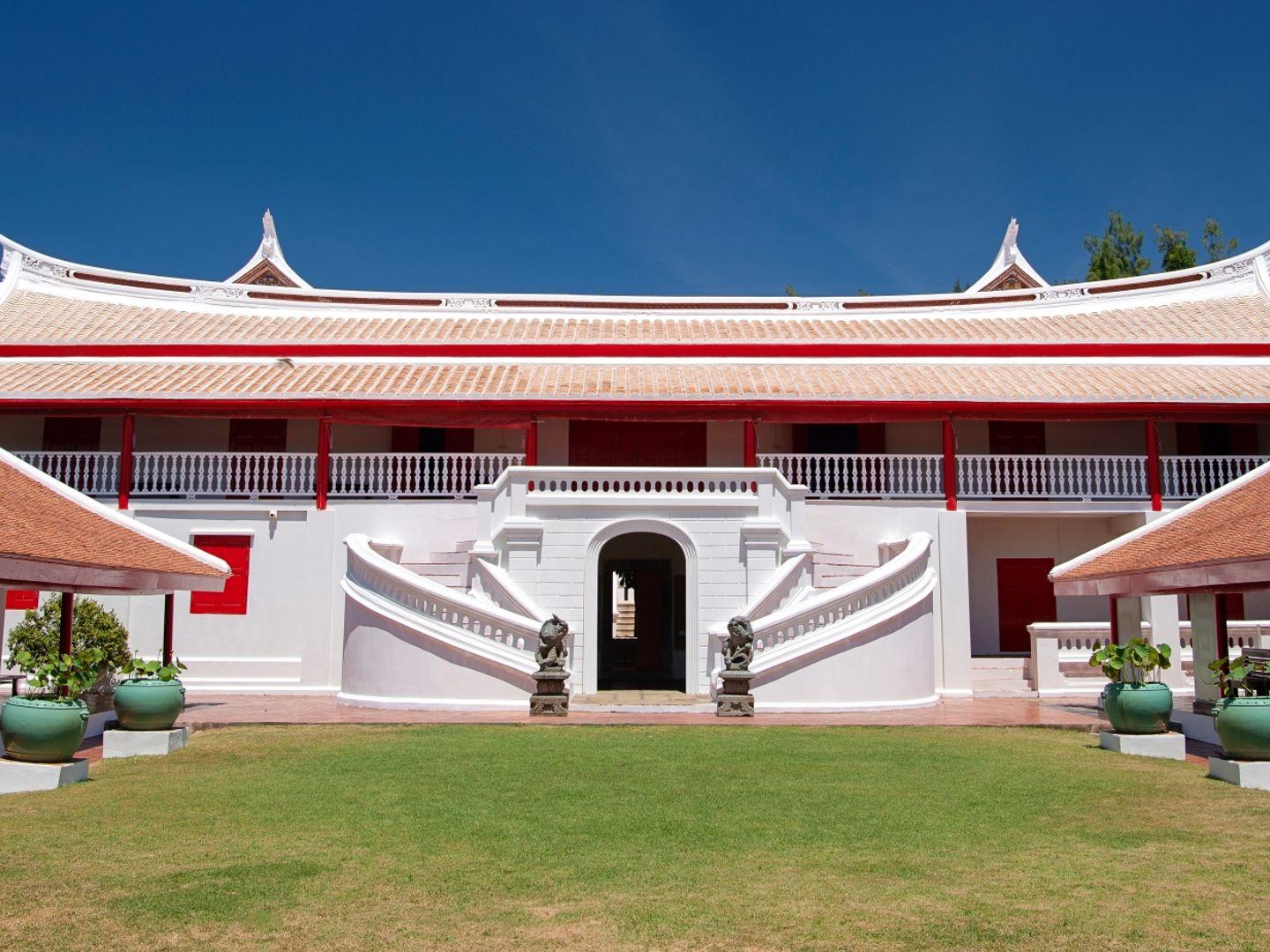

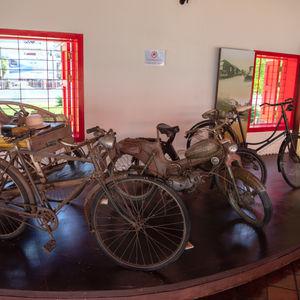
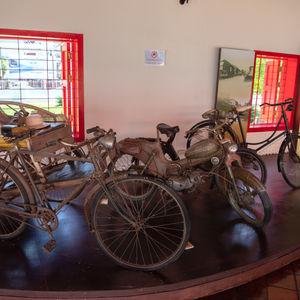
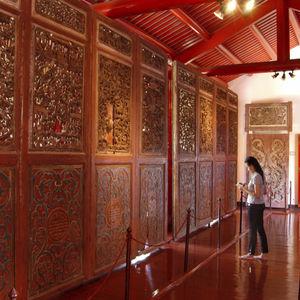
The National Museum of Songkhla is an exceptionally beautiful museum in Thailand, known for its over 100-year-old Chinese architectural design, which has been registered as a historic site by the Fine Arts Department. It was transformed into a national museum in 1973, and on September 25, 1982, His Royal Highness Crown Prince Maha Vajiralongkorn presided over its official opening. This museum serves as a venue to showcase southern Thai artifacts and acts as a center for learning in fields such as archaeology, art history, ethnology, Chinese art, and folk art. Among the many fascinating ancient artifacts on display is the original wooden door panel from the governor's residence, showcasing the artistry from the 24th Buddhist century, crafted with intricate carvings and colored paint, adorned with mother-of-pearl created by skilled Chinese artisans. This piece vividly represents the traditional beliefs that reflect the literature and religious customs of the Chinese culture. The museum also exhibits prehistoric artifacts sourced from archaeological sites in Ban Chiang and Kanchanaburi, as well as ancient relics related to the noble Na Songkhla family, who were the former rulers of Songkhla. The architectural appearance of the National Museum of Songkhla stands out with its distinguished Chinese-style façade over a century old. Originally built as a mansion for Phaya Sunthorn Anurak (Nat Na Songkhla), the assistant governor of Songkhla in 1878, it later served as the residence and office of Phaya Wichit Worasak, a special inspector for Songkhla, who eventually became Phra Chaiya Yomrat (Pun Sukhum). Over the years, it transitioned into the provincial administrative hall and, later, the provincial governor's office until 1953. The museum building itself is a blend of Chinese and European architecture, consisting of a two-story brick and cement structure facing west towards Songkhla Lake. It is raised approximately one meter above the ground and comprises four interconnected pavilion-style buildings linked by walkways. There are two staircases leading up, one at the front and another in the center of the inner courtyard. The central area features an open courtyard suitable for activities, while the front of the building includes a grassy area flanked by two halls. Additionally, there are grassy grounds and a garden surrounded by a curved Chinese-style wall. On the upper floor, the long room at the back showcases folding doors adorned with transparent carvings that depict stories from Chinese literature, interspersed with floral patterns and dragon motifs. The upper pillars of the building feature colorful paintings of Chinese deities and botanical designs. Inside, the ceiling beams display various symbols like yin-yang and Pa Kua to ward off various dangers, reflecting traditional Chinese beliefs. The roof is covered with double-layered tiles and has a curved ridge, with the ends elevated, reminiscent of the gable ends of Thai houses. Meanwhile, the exterior walls beneath the roof eaves are adorned with low relief sculptures and colorful paintings depicting Chinese deities and botanical patterns. This museum represents a significant architectural gem, truly worthy of study. Location: Situated on Vichian Chum Road, opposite the walls of Songkhla Province, in Mueang District, Songkhla Province.
Photo Credit: ททท.สำนักงานสงขลา
Songkhla National Museum
Province: Songkhla
Reviews from Members
Be the first to review this place
Contact Information


Phone Number
0 7431 1728